
Online Vedic Maths Classes for Students in India
Discover the ancient Indian system of lightning-fast mental calculation. Our Vedic Maths program teaches students powerful sutras and shortcuts that transform complex problems into simple, elegant solutions — boosting speed, accuracy, and confidence for school exams and competitive tests.
What Is Vedic Maths?
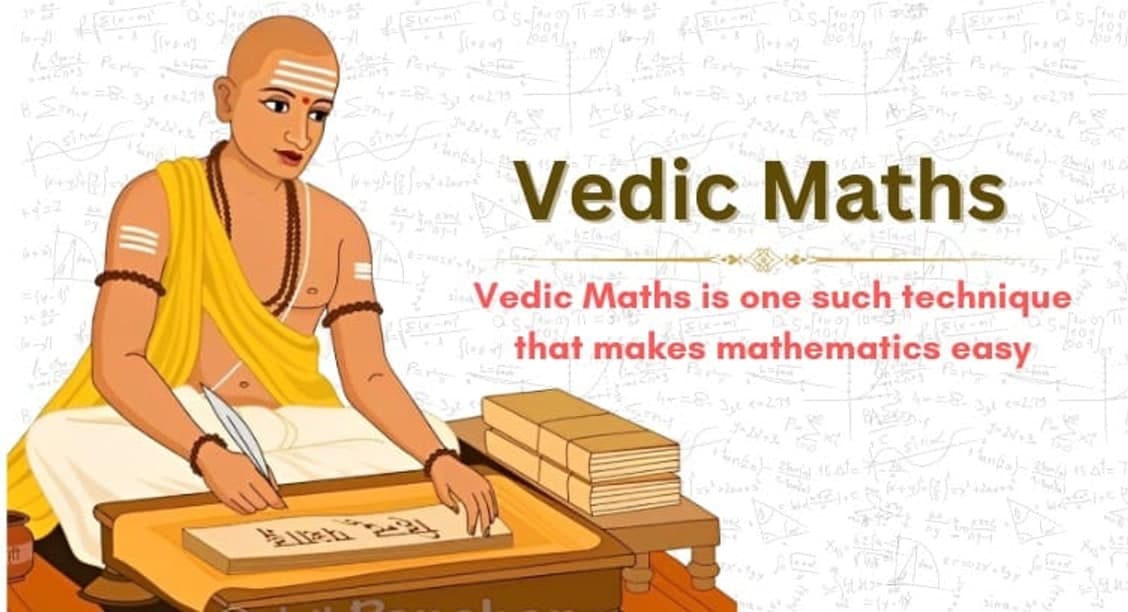
Vedic Mathematics is a remarkable system of mathematical techniques derived from ancient Indian scriptures known as the Vedas. Rediscovered and systematized by the revered scholar Bharati Krishna Tirthaji Maharaj between 1911 and 1918, this system is built on 16 foundational sutras (formulae) and 13 sub-sutras that provide elegant shortcuts for solving a wide range of mathematical problems — from basic arithmetic to advanced algebra, geometry, and calculus.
What makes Vedic Maths extraordinary is its simplicity and coherence. Unlike conventional mathematics, which often requires lengthy, mechanical procedures and multiple intermediate steps, Vedic techniques allow students to arrive at answers through intuitive, mental methods that are often 10 to 15 times faster. A problem that might take 5 minutes using the standard school method can frequently be solved in under 30 seconds using a Vedic approach — and with greater accuracy, because fewer steps mean fewer opportunities for errors.
Key Benefits
Improves Concentration & Memory
Develops laser-sharp focus and enhances memory retention through daily mental calculation practice.
Removes Fear of Maths
Transforms math anxiety into enthusiasm with simple, intuitive techniques that make numbers fun.
Sharpens Calculation Speed
Solve problems 5-15x faster with ancient sutras that reduce multiple steps to a single mental leap.
Boosts Confidence
Builds unshakable self-assurance as students master complex calculations faster than their peers.
The 16 Sutras of Vedic Mathematics
Ancient Indian formulae that provide elegant shortcuts for every branch of mathematics.
1. By One More Than the One Before
Used for squaring numbers ending in 5, multiplying numbers near a base, and special multiplication cases. For example, 35 squared equals 1,225 — simply multiply 3 by 4 (one more) to get 12, and append 25.
2. All from 9 and the Last from 10
The cornerstone technique for subtracting from powers of 10 and performing complements. Essential for rapid subtraction and finding deficits. For example, 1000 minus 357 equals 643 — subtract each digit from 9 (last from 10).
3. Vertically and Crosswise
The universal multiplication method that handles any two numbers. Works for 2-digit, 3-digit, and even larger multiplications with a consistent pattern. This single technique replaces multiple conventional multiplication methods.
4. Transpose and Apply
Used for solving equations and simplifying algebraic expressions by transposing terms. Reduces complex algebraic manipulations to simple, intuitive steps.
5. If the Samuccaya Is the Same, It Is Zero
A powerful technique for solving simultaneous equations and simplifying fractions. When a common factor appears in numerator and denominator, it can be cancelled immediately.
6. If One Is in Ratio, the Other Is Zero
Applied in solving proportionality problems and ratio-based equations. Simplifies problems involving direct and inverse proportions elegantly.
7. By Addition and by Subtraction
Used for solving equations where addition and subtraction of terms reveals the solution directly. Particularly useful in simultaneous linear equations.
8. By Completion or Non-Completion
Techniques for completing squares, cubes, and other expressions. Useful in algebra and geometry for simplifying expressions by recognizing patterns.
9. Differences and Similarities
Applied in differential calculus and for finding differences between expressions. Helps in identifying patterns that simplify complex problems.
10. Whatever the Deficiency, Decrease by That Amount and Set Up the Square of the Deficiency
Used for squaring numbers near a base (like 100 or 1000). For example, 96 squared: decrease 96 by 4 (the deficiency from 100) to get 92, then append 4 squared (16) to get 9,216.
11. By Mere Observation
Solve problems simply by looking at them and recognizing patterns. Experienced Vedic Maths practitioners can solve many problems at a glance without writing anything down.
12. The Remainders by the Last Digit
Used for finding remainders and checking answers. A quick verification technique that helps students catch errors instantly without reworking the entire problem.
13. The Ultimate and Twice the Penultimate
A technique for verifying whether a number is divisible by 7 and for solving specific types of division problems efficiently.
14. By One Less Than the One Before
Complements the first sutra and is used for specific multiplication patterns, particularly when multiplying numbers that are close to powers of 10.
15. The Product of the Sum
Used for verifying multiplication results and for solving specific algebraic problems by examining the sum of digits and their products.
16. Only the Last Terms
Applied in calculus and for solving problems where only the final terms matter. Particularly useful in integration and differentiation shortcuts.
Revised Vedic Maths Syllabus
Three levels, the same for every class — every topic taught from basic to advance.
Level 1
Basic Foundation
The whole Vedic system from the ground up — the 16 sutras and 13 upsutras, vinculum working, and criss-cross and base multiplication up to five digits.
- Number System
- Higher Addition
- Addition of a series
- Sutra based quick Addition
- Subtraction
- Subtraction with vinculum
- Tables (11-999)
- Tables with vinculum
- Special Addition and Subtraction
- Magic Squares
- 2D-5D Multiplication (Criss-cross method)
- 2D-5D Multiplication (Base method)
- Special Multiplication Techniques
- 16 Sutras and 13 Upsutras
- Olympiad Hacks
Level 2
Intermediate Level
Squares, cubes, roots and division mastery — the techniques that turn a correct answer into a fast one, applied to competitive-level questions.
- Squares (2D-5D) - standard, duplex & base method
- Cubes (2D-4D)
- Square root & Cube root (Perfect)
- Square root & Cube root (Imperfect)
- Division mastery (Paravartya Yojayet and Flag Division method)
- Divisibility rules
- Special Division techniques
- Auxiliary Fraction
- Application of techniques in competitive level questions
- Olympiad and Reasoning Hacks
Level 3
Advance Application
Where the sutras meet school syllabus and real life — algebra, polynomials, fractions and decimals, plus calendar and clock techniques.
- Calendar dates
- Clock techniques
- Fraction (add, sub., mult., div.)
- Ladder fraction
- Decimals (add, sub., mult., div., roots)
- HCF & LCM
- Algebra & Equations - Quadratic equations
- Algebra & Equations - Factorization
- Algebra & Equations - Linear and Simultaneous equation
- Division of Polynomials
- Digital Sum verification
- V BODMAS
- Units & measurement
- 50+ Reasoning shortcut hacks
Platform Features
Live Interactive Sessions
Real-time online classes with expert instructors
Small Batch Size
Maximum 6 students per batch for personal attention
Doubt Sessions
Dedicated time to clear every question and concept
Practice Sheets
Curated worksheets for daily skill reinforcement
Assessments
Regular evaluations to track progress and growth
Certificates
Recognized certification on level completion
Parent Reviews
What Parents Say
Be the first parent to review us
Is your child learning with Priti G? Share your experience in a minute. Approved reviews appear here.
Write a reviewVedic Maths class fees
Fees depend on your child's level and the course duration, so we share the exact fee during the free demo class— once we know where your child is starting from. There is no cost and no obligation to join after the demo.
What the fee includes
- Every live class with the instructor (small batches, never recordings)
- Worksheets and structured daily practice sheets
- Speed drills, level-end assessments and digital resources
- A certificate on completing each level
See our refund policy and FAQ.
Vedic Maths: questions parents ask
Can Vedic Maths Help With CBSE Board Exams?
Board exams reward accuracy and time management more than cleverness. So parents reasonably ask whether Vedic Maths — a system of shortcuts — actually helps, or whether it is a distraction from the standard methods the answer script demands.
Vedic Maths Divisibility Rules That Save Exam Time
Divisibility rules are the highest-value, lowest-effort thing a student can memorise. They turn "is 8,547 divisible by 3?" from a division into a two-second glance, and they appear constantly in olympiad papers, simplification questions and factorising.
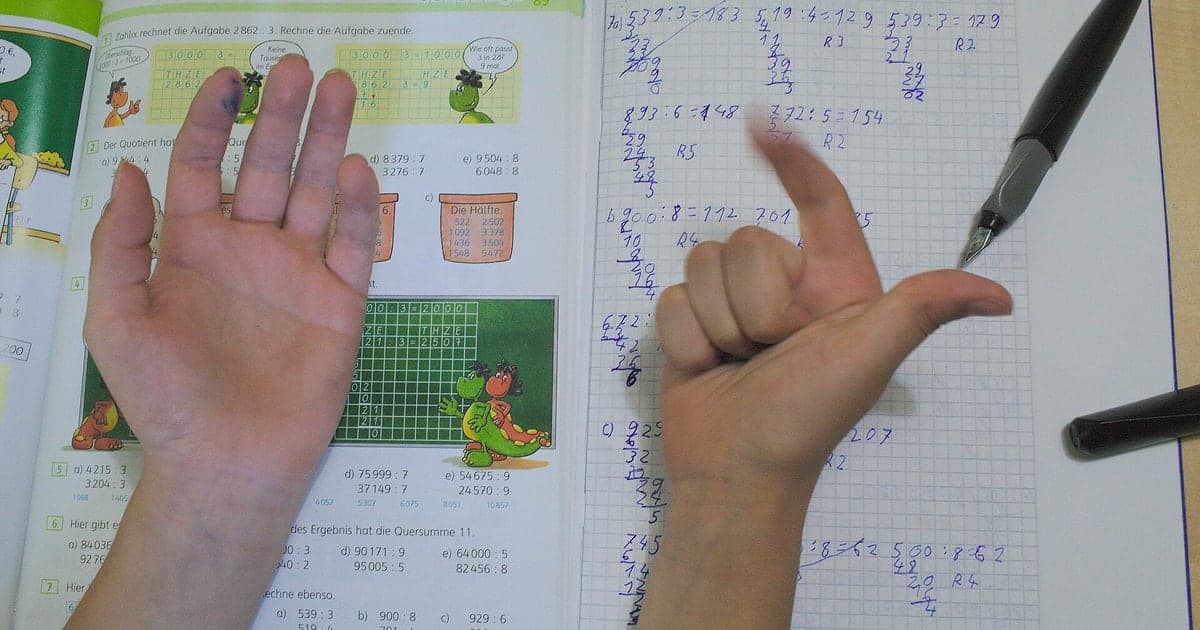
Nikhilam Explained: Multiplying Numbers Near a Base
Ask most people to multiply 97 × 96 and they will reach for paper or a phone. A student who knows Nikhilam does it in about four seconds, in their head.
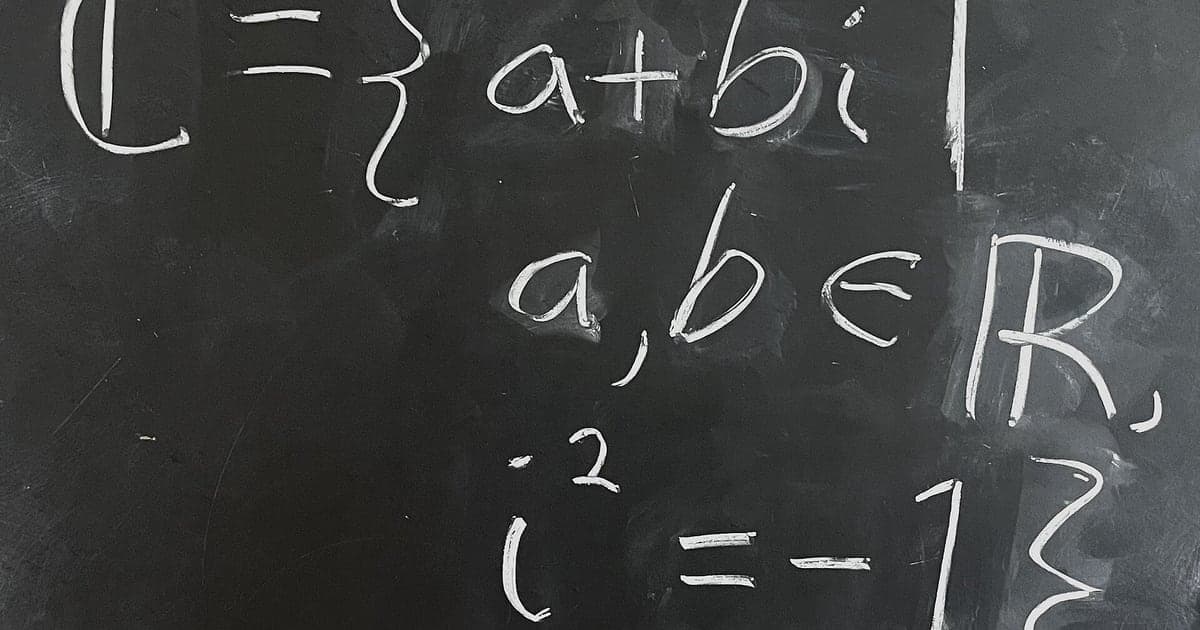
Vedic Maths for Algebra: Going Beyond Arithmetic
Vedic Maths is usually presented as a set of arithmetic shortcuts — fast multiplication, quick squares, easy division. That is where most courses stop.

7 Signs Your Child Is Ready to Start Vedic Maths
Not sure if it's the right time for Vedic Maths? Here are 7 clear signs your child is ready to start — and how to set them up for success.
Vedic Maths Shortcuts for Squares, Square Roots and Cubes
Learn Vedic Maths shortcuts to square numbers, find square roots and calculate cubes mentally — powerful skills for school and competitive exams.
Ready to Start?
Give your child the gift of lightning-fast mental math. Book a free demo class today and watch them solve problems with speed and confidence.