
Quantitative Aptitude Classes for Class 6 Onwards
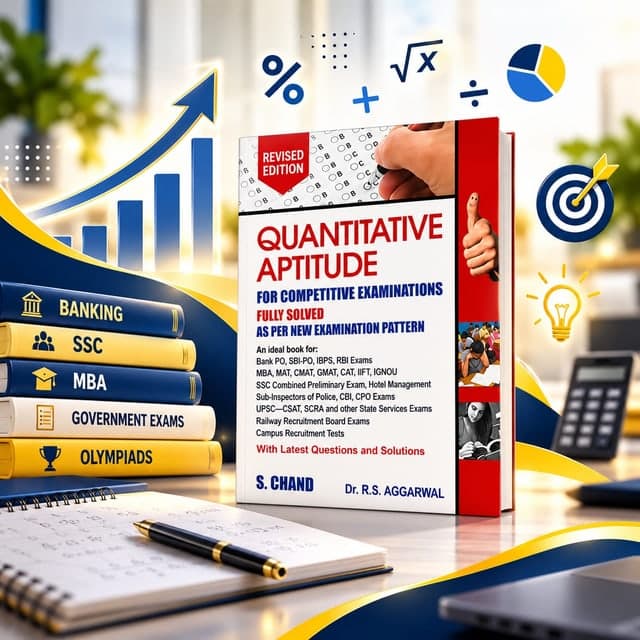
The problem types that decide marks in school tests and competitive papers — percentages, ratios, averages, time-and-work, data interpretation — taught with the shortcuts and the timing practice that make them automatic.
Complete course
in just 6 months
For students
Class 6 onwards
Prepares for
Competitive & olympiad exams
Format
Online live classes
The same aptitude topics carry through to later exams — banking, SSC, MBA entrance and government recruitment papers — as well as school olympiads, so the habits built now keep paying off.
What your child will learn
Eight topic blocks, each with shortcuts, worked examples and timed practice
Numbers & Divisibility
Factors, multiples, HCF/LCM and divisibility rules that remove guesswork.
Percentages
Profit and loss, discount, and the percentage-change shortcuts that save the most time.
Ratio & Proportion
Sharing, mixtures and unitary-method problems solved without long working.
Averages
Weighted averages and the 'deviation' trick that turns a page of work into one line.
Time, Speed & Distance
Relative speed, trains and boats — the classic exam favourites.
Time & Work
Efficiency method for work-and-wages problems, including pipes and cisterns.
Simple & Compound Interest
Formulas plus the mental shortcuts that make them exam-fast.
Data Interpretation
Reading tables, bar charts and pie charts quickly and accurately.
Is your child ready for aptitude?
- In Class 6 or above
- Comfortable with fractions, decimals and percentages
- Finds long word problems slow or confusing
- Preparing for school tests, NTSE or Olympiads
- Has done Vedic Maths or abacus and wants the next step
Below Class 6? Start with abacus or Vedic Maths — they build the calculation speed aptitude then puts to work.
How the classes run
One live class a week with the instructor, in a batch of no more than six students, so every child gets their working checked rather than just watching someone else solve.
Each topic follows the same rhythm: the method, two worked examples, then a timed set. The timing is the part most classes skip and the part exams actually test.
Between classes we expect fifteen to twenty minutes of practice on most days. Our free worksheets show exactly the style of work involved.
We teach students in India and abroad, so class timings are arranged around your timezone.
Parent Reviews
What Parents Say
Be the first parent to review us
Is your child learning with Priti G? Share your experience in a minute. Approved reviews appear here.
Write a reviewOnline Quantitative Aptitude classes for students outside India
Every class is live online, so children join from anywhere. We teach students in India and abroad, with batch timings arranged around your timezone.
Online classes worldwideQuantitative Aptitude class fees
Fees depend on your child's level and the course duration, so we share the exact fee during the free demo class— once we know where your child is starting from. There is no cost and no obligation to join after the demo.
What the fee includes
- Every live class with the instructor (small batches, never recordings)
- Worksheets and structured daily practice sheets
- Speed drills, level-end assessments and digital resources
- A certificate on completing each level
See our refund policy and FAQ.
Quantitative Aptitude: questions parents ask

Time, Speed and Distance: Every Formula Your Child Needs
Time, speed and distance is the topic where word problems suddenly get long. Trains crossing platforms, boats going upstream, two cars leaving different cities — the arithmetic is simple, but the setup confuses students.

How to Solve Average Problems in Seconds
Averages look like the easiest topic in the paper. Add the numbers, divide by how many there are.
Ratio and Proportion Made Simple for School Students
Ratio is one of those topics that looks easy in Class 6 and then quietly becomes the backbone of half the maths paper — mixtures, partnerships, speed, scale drawings, profit sharing, even chemistry later on.

Time and Work Problems: The Efficiency Method Explained
"A can do a job in 12 days, B in 18 days. Working together, how long will they take?"

Percentage Shortcuts Every Student Should Know
Percentages are everywhere in a maths paper — profit and loss, discount, simple interest, data interpretation, even geometry questions that hide a percentage inside them. And they are where most students lose the most time.

Speed Maths Techniques for Competitive Exams (SSC, Banking, Railways)
Competitive exams are won on speed and accuracy. Learn the speed maths techniques that help aspirants solve the quantitative section faster and score higher.
Frequently asked questions
What age or class is quantitative aptitude suitable for?
We start from Class 6. By then a child has the fraction, decimal and percentage foundation the topics build on. Below Class 6, abacus or Vedic Maths is the better fit.
How is this different from Vedic Maths?
Vedic Maths teaches calculation shortcuts — faster multiplication, squares, division. Quantitative aptitude teaches problem types: percentages, ratios, time-and-work, data interpretation. Vedic Maths makes the arithmetic fast; aptitude teaches what to do with it. Many students do Vedic Maths first, then aptitude.
Is this only for competitive exams?
No. The topics are the backbone of school maths from Class 6 to 10, so it helps school marks immediately. It also builds the foundation for NTSE, Olympiads and later SSC, banking or campus placement papers.
Are the classes live?
Yes — every class is live with the instructor, in small batches, never a recording. Doubts get cleared in the class itself.
How much practice is needed at home?
Fifteen to twenty minutes on most days. Aptitude rewards timed practice more than long sessions, so short and regular beats a weekend marathon.
Do you provide practice material?
Yes, topic-wise sheets and timed mock sets. You can also download our free speed-maths and mental-maths worksheets to see the style of practice before joining.
See a class before you decide
A free 30-minute live class — a real topic taught properly, plus an honest assessment of where your child currently stands. No cost, and no obligation to join.
Questions first?
Message us and we'll tell you honestly whether aptitude is the right next step for your child.
Chat on WhatsAppBook a free demo class
We'll confirm the timing on WhatsApp.